

English-Speaking Members Face Salary Gaps – Equality Found in State Research Institutes
Loimu’s employment and salary survey (October 2025) shows differences in job market position and salary levels between all Loimu members and English-speaking members. Although the number of English-speaking respondents was relatively small (130), the group is considered fairly representative. Nevertheless, the limited group size reduces the reliability of the results.
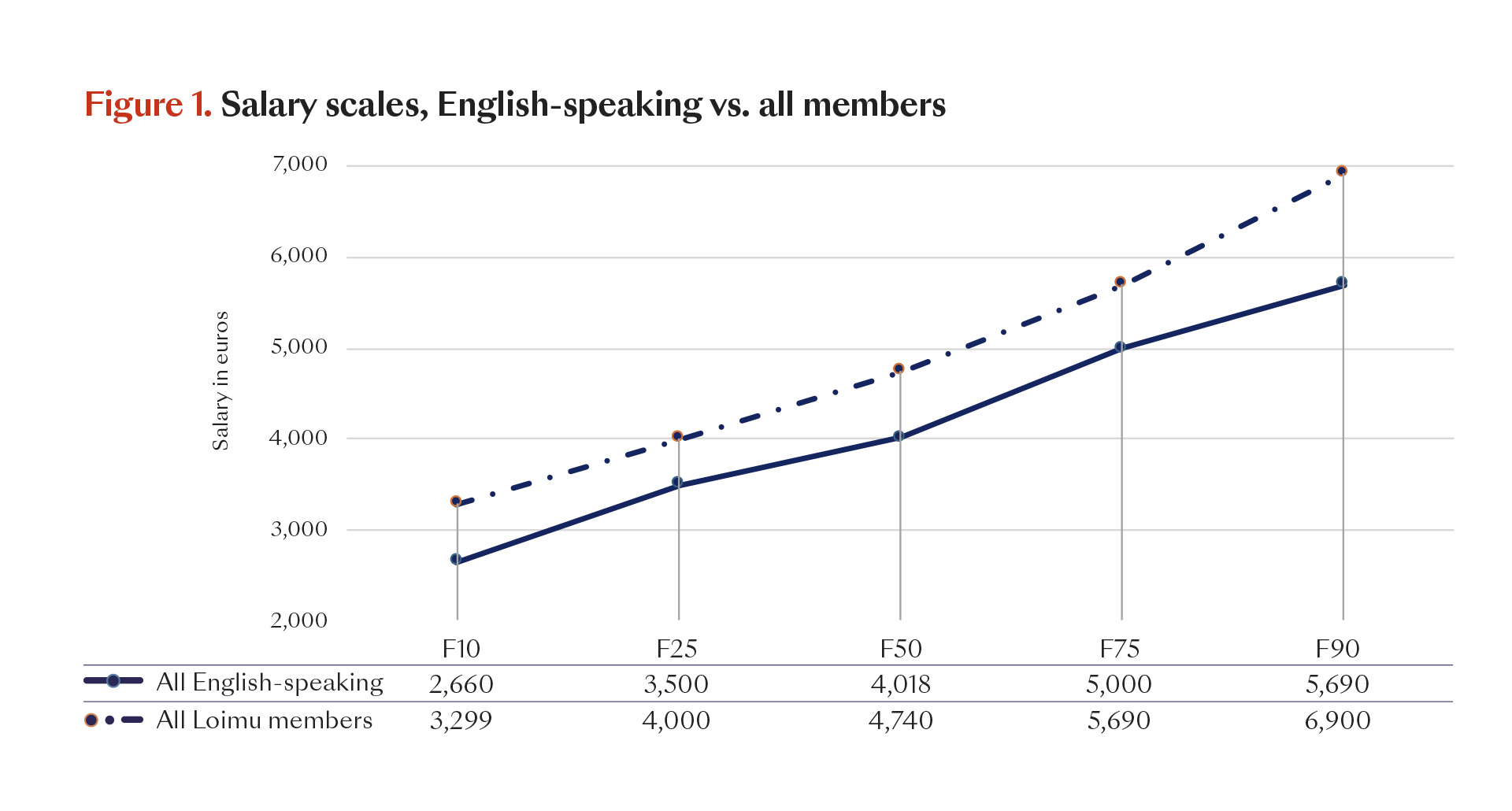
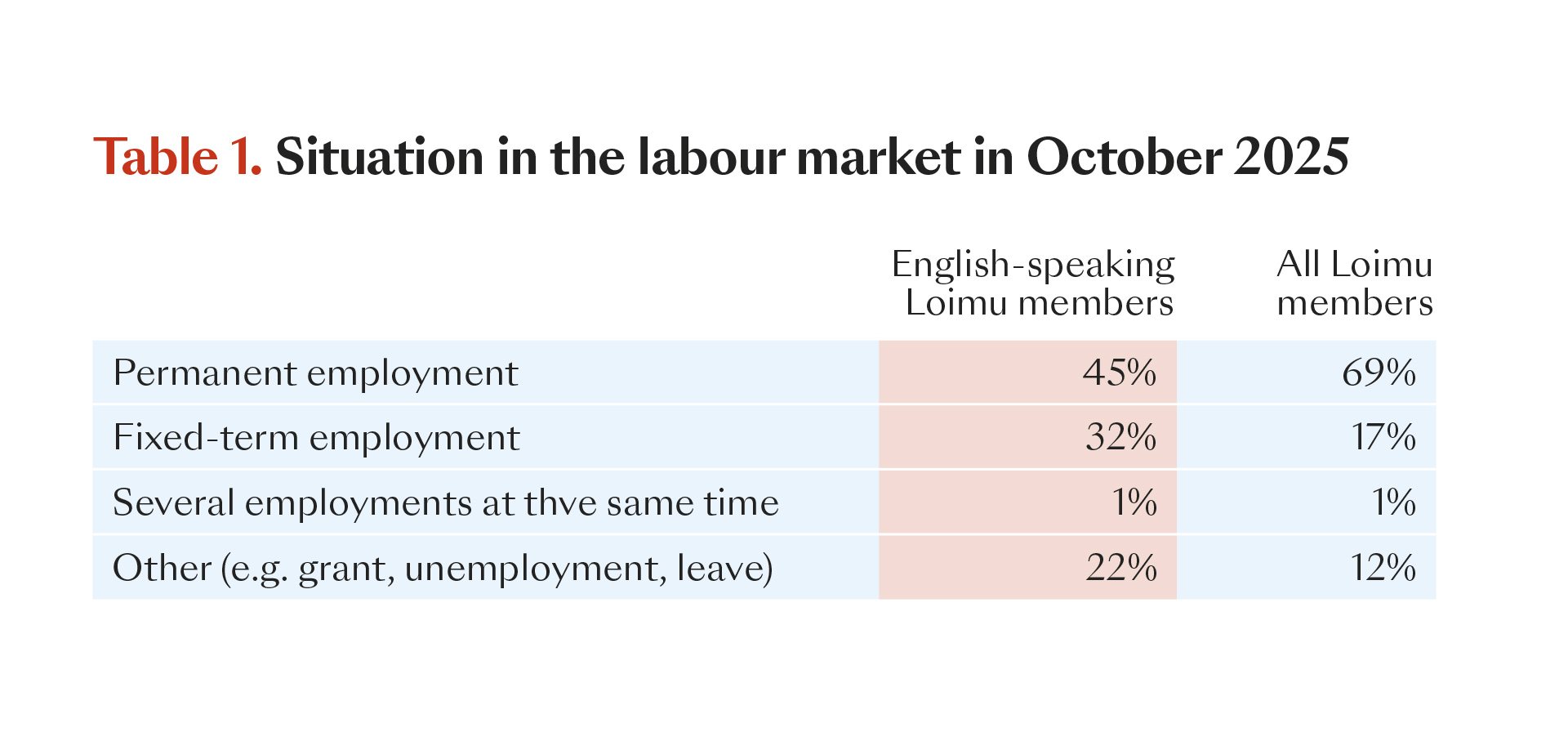
Salaries for English-speaking members were €500–1,200 lower than those of all Loimu members across all percentiles (Figure 1). This is partly explained by differences in job positions, sectors or branches, and years of experience. While fixed-term contracts should not directly affect salary levels, fixed-term employees generally earn less. English-speaking members hold fixed-term positions more often than all members (32% vs. 17%) and are less likely to have permanent employment (45% vs. 69%) (Table 1). They are also more often in other types of employment situations, such as grant-funded positions, unemployment, or on family leave (22% vs. 12%). Every third English-speaking member works in university, which is more common than among all members, especially among women.
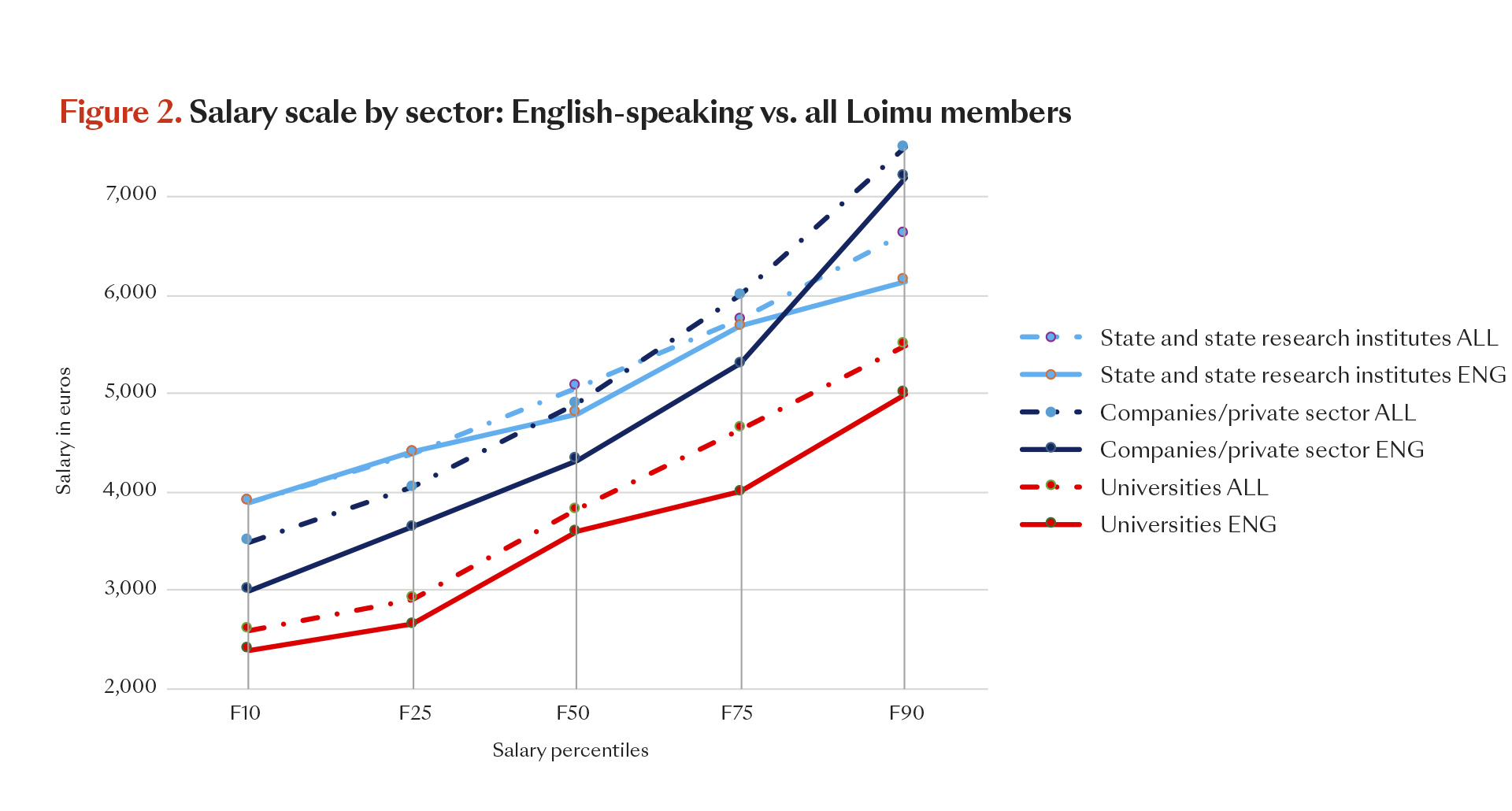
Across sectors, the differences between English-speaking and all members disappear in state and research centres (Figure 2), except among the highest 10%. In universities, salaries of English-speaking members are €200–300 below median, with the gap widening slightly at higher percentiles. The largest differences are found in the private sector, where the gap ranges from €400 to €700.
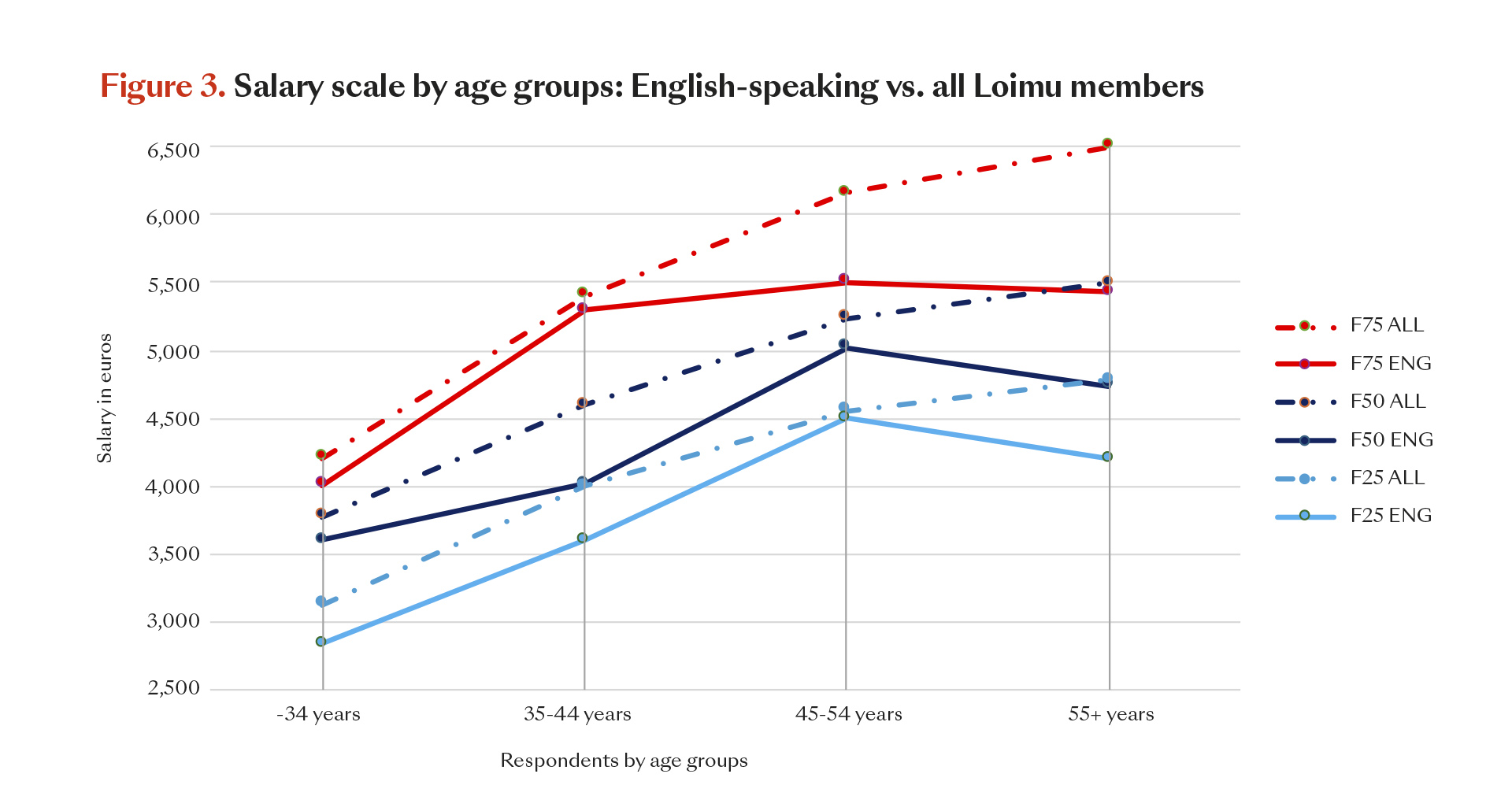
Age-group comparisons suggest that younger generations might be treated more equally in the labour market (Figure 3), although there are still differences. Salary levels among the highest-paid 25% are similar up to the age of 44. However, English-speaking members aged 45 and over show weaker salary development, with the largest gap appearing in the 55+ age group.
The increased labour market insecurity affects both groups, but English-speaking members report slightly more uncertainty regarding their workplace situation. They are also less familiar with their organization’s salary system: 43% report not knowing the basis of the system, compared to 15% of all members.