

“In Finland, I am trusted to do my job”
When Swarnendu Ghosh moved from India to Finland in 2020, he was looking for a good education, promising career opportunities and a colder climate. Six years later, he has built a career, started a business and found a home in Kuopio. Along the way, he has learned a great deal about Finnish working life – and himself.
When Swarnendu Ghosh decided to pursue his master’s degree in Finland, he had two things in mind. He wanted to invest in an education that would pay off financially, and he wanted to live somewhere cold.
Both wishes came true.
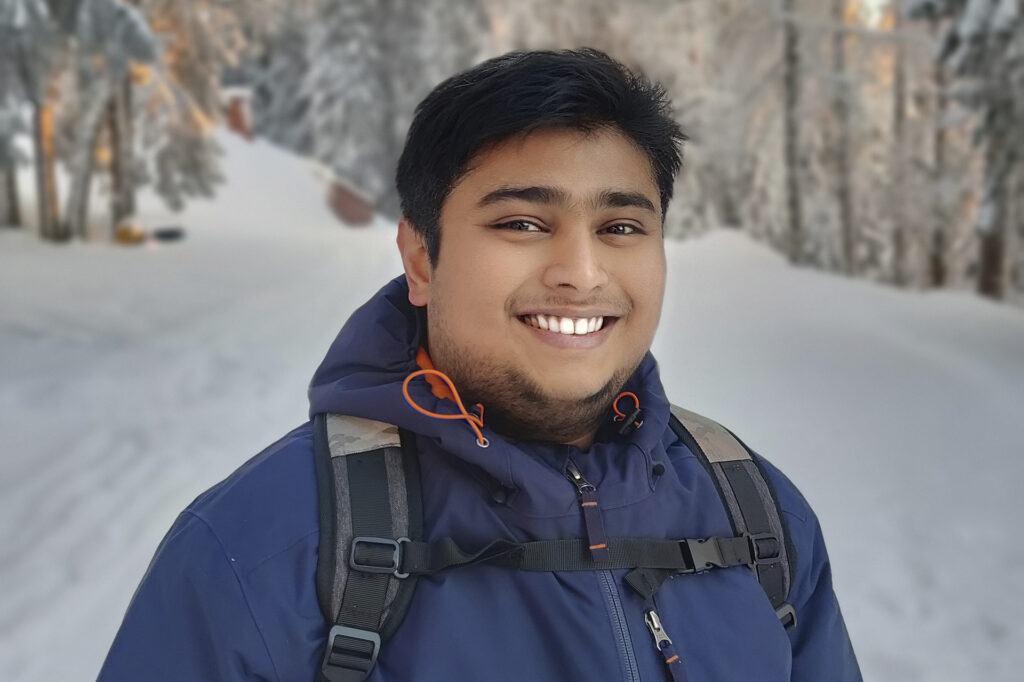
Even after receiving a scholarship, he spent nearly €30,000 on his two-year degree. It was a substantial investment, but one he managed to recover during his first year of employment.
Finland also delivered on the weather.
“I actually enjoy the darkness and the cold. I know I’m different from most people in that respect,” he says.
The climate was one of the reasons he decided to stay after graduation. But over the years, Finland has offered him much more than cold winters.
A career built around solving problems
Today, Swarnendu holds multiple professional roles. He works as a maintenance technician and deputy biosafety officer at FinVector Oy while also running his own training business.
At FinVector Oy, his responsibilities range from preventive maintenance and equipment lifecycle management to biosafety procedures, regulatory reporting and employee training.
His work is guided by Good Manufacturing Practice (GMP) requirements, which help ensure that pharmaceutical products are consistently produced and controlled according to quality standards.
A typical working day may include training sessions, time in cleanrooms, communication with external partners and troubleshooting technical problems.
“My job is essentially about solving problems. I’m fairly good at it, and I thoroughly enjoy it.”
His own company provides a different kind of challenge. As its founder and lead trainer, he currently handles everything himself: marketing, website development, payment systems, customer service and, of course, delivering training.
Preparing a training session can take weeks, as he develops the content and considers how best to present it to his clients.
The two roles are kept strictly separate, but they share an underlying philosophy.
“In both places, my goal is to create the best possible value in a responsible, sustainable and compliant way.”
Learning to work the Finnish way
Adapting to Finnish working life was not always straightforward.
One of the first things Swarnendu noticed was how differently people communicate at work compared with what he had been used to in India.
He had to learn to communicate more directly and precisely, including being open about mistakes. Learning Finnish also helped him understand workplace conversations and become more integrated into the working culture.
Another major difference was the level of independence employees are given.
“In India, tasks are assigned and progress is monitored very closely. Here in Finland, my expertise is respected, and I’m allowed to work without micromanagement.”
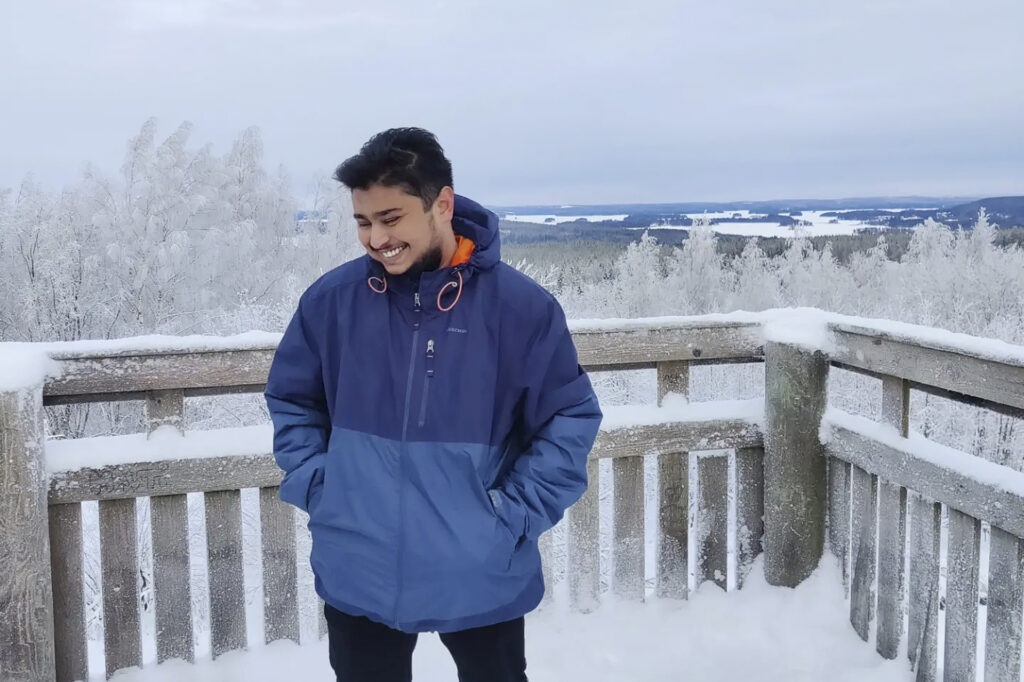
“I’m incredibly proud to be a Loimu member and grateful for all the support the union has provided me.”
On the other hand, he had to become more confident in managing his own schedule and taking responsibility for the progress of his work.
The transition from an academic background to a GMP-regulated working environment presented another challenge.
“You do things differently, and you document things differently. It took me months to master.”
His employer provided considerable support and training during the transition. The experience also helped him recognise a gap between academic education and the practical requirements of industry.
Bridging that gap is now one of the goals of his own training business.
It’s not just about language skills
Cultural differences are not limited to the contrast between India and Finland. At his workplace, more than 50 nationalities work under the same roof. Learning to communicate effectively with colleagues from such a wide variety of backgrounds has been an education in itself.
Initially, understanding different communication styles was challenging. Over time, patience, openness and a willingness to understand other perspectives helped him find common ground with his colleagues.
The experience has taught him that successful collaboration in an international workplace requires more than a shared language. It also takes an effort to understand how other people think, communicate and approach their work.
Making friends on Finnish terms
Outside work, building a social life in Finland took time.
Like many international students, Swarnendu initially found it difficult to make friends. During his studies, he became actively involved in the student association Kulti ry and local Erasmus Student Network (ESN) activities.
But he also made a conscious effort to meet people beyond international student circles.
“My goal was to adapt while preserving my own identity.”
He spent time getting to know Finnish people, learning local customs and improving his language skills.
Gradually, those efforts paid off.
“I’ve realised that the biggest challenge is getting to know people on their own terms. Once you’ve crossed that threshold, building a friendship becomes much easier.”
Today, his social network is one of the things that makes life in Kuopio feel stable and fulfilling.
Language barriers have occasionally caused difficulties, particularly when accessing healthcare. However, learning Finnish and receiving active support from his employer have helped him overcome these challenges.
The best thing about life is life itself
Ask Swarnendu what the best thing in his life is right now, and his answer is simple.
“My life.”
This year, he married the woman he wants to grow old with. The couple are now looking forward to celebrating their marriage twice more next year, once in each of their home countries.
They are also hoping to adopt a cat.
Professionally, Swarnendu enjoys the variety that comes from combining his day job with running a business. Both offer opportunities to solve problems, learn new skills and take on different challenges.
Just as importantly, he appreciates being able to disconnect from work on his days off.
Looking further ahead, he sees his future in Finland. He hopes that the gradual expansion of English-language services and activities will make life here increasingly inclusive and welcoming for international residents.
And despite all the challenges of adapting to a new country, there is very little he would change about his life here.
Except perhaps one thing.
“I’d happily get rid of icy winters and have more snow instead. Footpaths that look like mirrors, with the constant risk of slipping, are really the only bad thing about Finnish winters.”
The darkness and cold, however, are welcome to stay.